bornholm • winter on bornholm • off-season • road trip • rønne • Christiansø • Hammershus
Bornholm off-season
Most tourists visit Bornholm between May and September. After all, it’s the “island of bikes”, so summer rides around Bornholm are a popular way to spend time. Visitors love relaxing on the sandy beaches in the south of the island and enjoying the charm of Bornholm’s small towns.
But what can you do on Bornholm in winter? If you’re wondering whether it’s worth coming to this corner of Denmark around the turn of the year, I can assure you it is! My husband and I decided to take a week-long trip to Bornholm in December. Our friends thought the idea was unusual, and our family kept asking what we would do on such a small island in such a non-touristy month. But we were eagerly looking forward to the trip—excited about the prospect of silence, calm and isolation.
Best for
quiet travel • winter vibes
Getting around
car • buses
Top places
Rønne • Hammershus • Christiansø
Tip
plan by daylight
Getting to Bornholm
We set off in our own car. Outside the season, the easiest way to reach Bornholm from Poland is via Sweden. First, we took the Stena Line ferry from Gdynia to Karlskrona. We use this route relatively often and usually travel overnight. By early morning the ferry is already in Karlskrona, and then we still have a two-hour drive to Ystad. From there, the Bornholmlinjen ferry departs on the Ystad–Rønne route. Although Bornholm can also be reached by sea from Germany, Denmark and Poland, the connection from Ystad is the shortest, and the crossing takes from 1h20 to 1h30 depending on sea conditions.
During the pandemic, passengers had to stay in their vehicles, but the short crossing time makes this manageable. In the era of coronavirus, entering Bornholm was more restrictive than usual, and some vehicles were subject to sanitary checks.
Accommodation – a home away from home
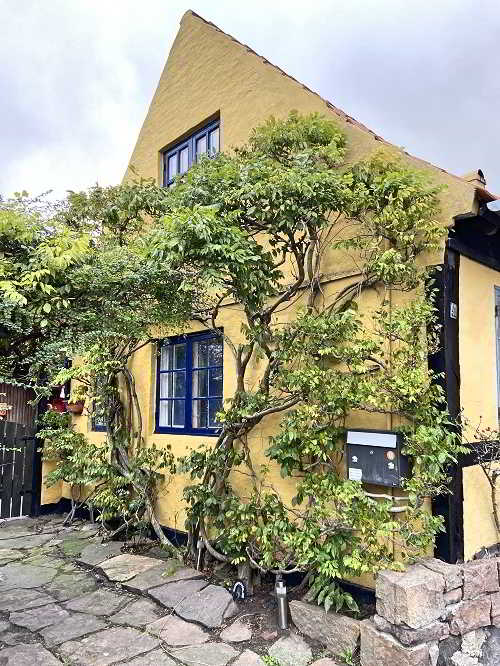
For our week-long stay, we decided to rent a holiday cottage through DanHoliday Center, whose office is located in a shopping centre in the middle of Rønne. Booking and key pick-up procedures were lightning-fast. A huge advantage of short-term rentals off-season is the much lower price. Renting a cottage for a week cost only 3000 DKK. The price was competitive even compared to local hotels.
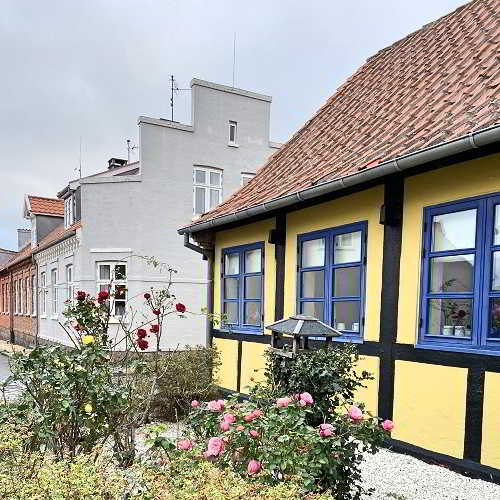
A downside of local properties is their seasonal construction. Many houses are designed primarily as summer homes, which is reflected in their architecture. Single-pane windows and uninsulated walls mean it’s simply cold inside, and heating four poorly insulated walls requires a lot of energy. This matters because electricity and water are charged separately based on meter readings.
We stayed in small Lobbæk—a village located halfway between Rønne and Aakirkeby. The place, although off the beaten track, was well connected and quiet. I suspect that in summer it must feel truly idyllic, and the large garden in front of our cottage can be used for sunbathing, sports or children’s play.
Transport
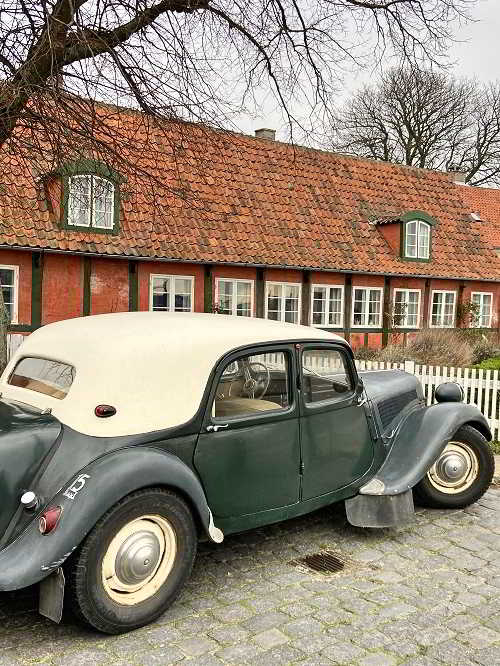
In winter, a car works much better than a bike for getting around Bornholm. If you fly to the island from Copenhagen, it’s worth considering renting a car—roads are good and traffic is light. I can assure you that even people with little driving experience will feel comfortable behind the wheel.
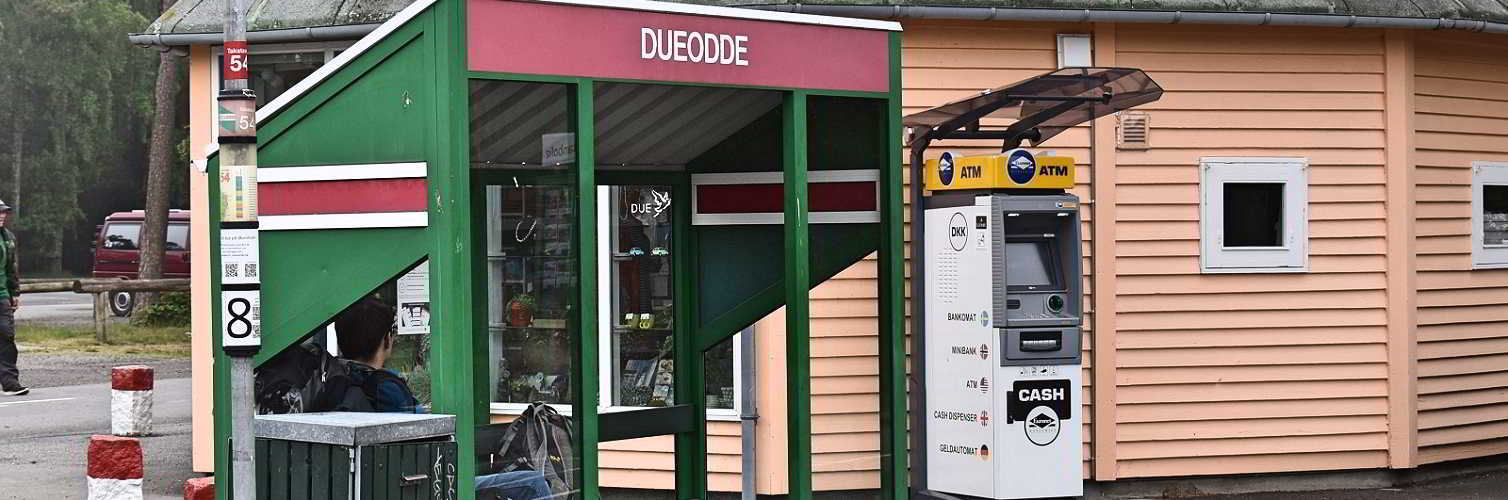
During the week we came across only a handful of cyclists, and all of them looked like locals. This somewhat supports the idea that cycling tourism is best left for the summer months. There is also a well-functioning bus network on the island. It’s worth mentioning Bornholm’s bus stops—the shelters are painted in the colours of the local flag.
In the streets of Rønne you can also spot a few taxis serving tourists without cars and night owls. Denmark has outlawed the UBER corporation, so local taxi drivers are doing well—even on tiny Bornholm.
Bornholm’s “gateways to the world” include the ports in Rønne and Nexø, as well as the airport on the outskirts of Rønne. A modest terminal the size of a neighbourhood supermarket efficiently serves regular connections to Copenhagen, and in summer seasonal flights to Germany and several Danish cities.
Cuisine
Despite its small size, Bornholm is a culinary melting pot. Many restaurants—especially those with outdoor seating—are seasonal, but quite a few places stay open year-round. Because gastronomy was in lockdown in Poland at the time, we were really looking forward to a proper restaurant visit: table service and eating on site.
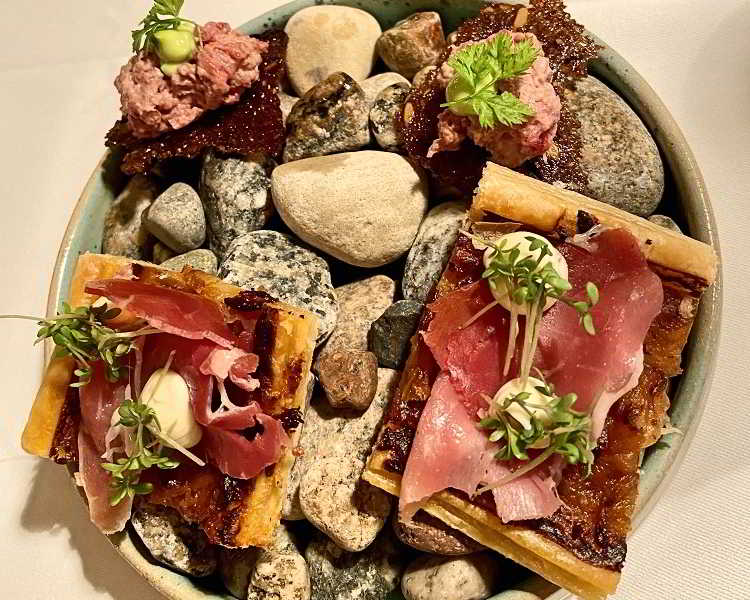
Another advantage of the low season was how easy it was to book a table. We went for dinner at Det Røde Pakhus restaurant in central Rønne, and it was a bullseye. The place is decorated in a typical Nordic style, and the menu is based on local ingredients. Still, you’ll find Italian and Asian inspirations in some dishes.
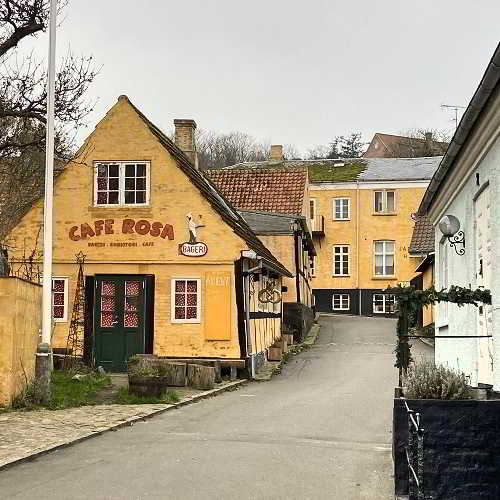
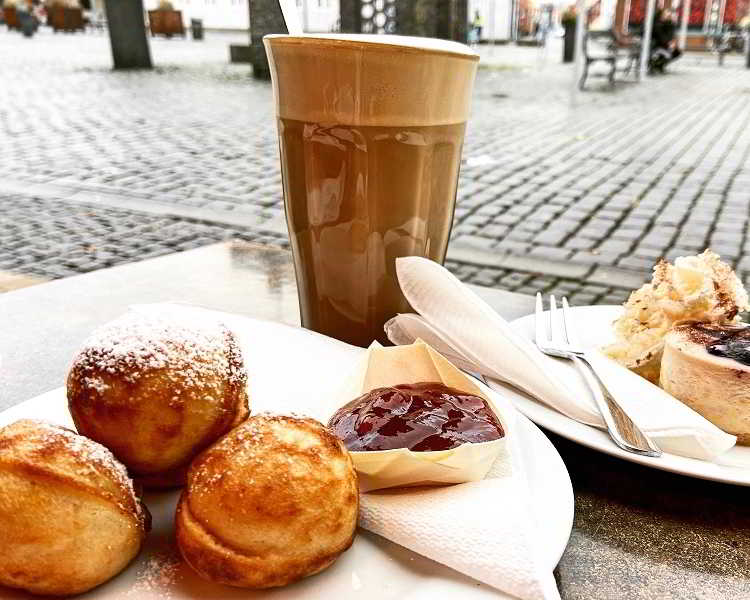
In the heart of Rønne there are also plenty of atmospheric cafés—my favourite was Gustav. During Advent it’s worth trying a typical Danish dessert there: æbleskiver—small pancake-dough balls served with jam. The cakes look just as tempting—especially the blueberry cheesecake.
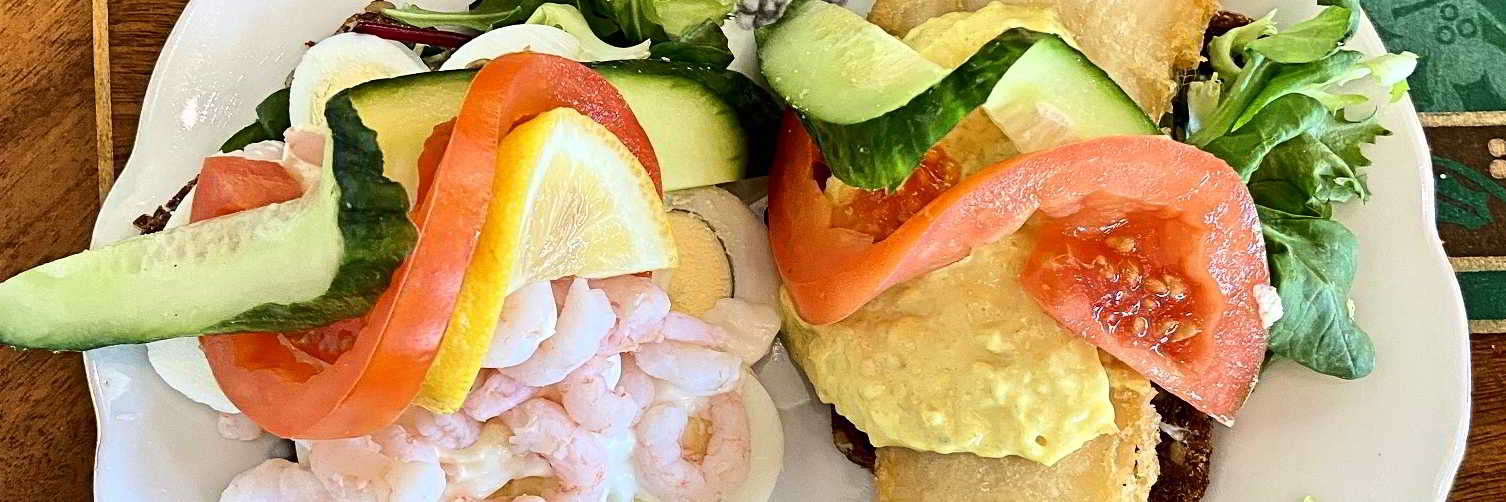
Meanwhile, for the best sandwiches you need to go all the way to the other side of the island, to Nexø. The eclectic Guldbønnen café serves iconic Danish smørrebrød in both warm and cold versions—both delicious and filling.
Bornholm is famous for its smokehouses, with the best-known ones located in Svaneke, Allinge and Hasle. Unfortunately, the sad news for December visitors is that the lion’s share of smokehouses are closed. We were desperate to taste the famous Bornholm smoked specialities and eventually found one smokehouse selling takeaway. Sadly, when we managed to reach the owner by phone, it turned out they accept orders only far in advance. It looks like we’ll have to return in spring or summer to explore local smokehouse traditions properly.
Local products
What absolutely delighted me on Bornholm was the number of independent ceramic studios, local makers, micro-businesses and artistic gems hidden in garages and rural sheds. It’s a refreshing contrast to chain stores and mass production.
A fantastic souvenir from Bornholm is ceramics—and the design landscape is so diverse that everyone will find something they love. Pieces from a small Bornholm workshop can be found, among others, in Copenhagen’s iconic restaurant Noma.
It’s also worth buying local food products—they’re tasty and high-quality. I especially recommend Bornholm mustards and oils, as well as candies from the factory in Svaneke. In tiny countryside shops you can also find homemade honey and jams.
Bornholm beer also deserves attention. There are several small breweries on the island specialising in craft beer.
All around the island you can also come across self-service stands with local products, where you pay by leaving money in a tin can attached to the stall.
Fashion lovers should head to Gudhjem, where there are many boutiques with locally made clothing. Natural fabrics dominate—cotton and linen.
Sightseeing
Sightseeing on Bornholm in winter is best planned around daylight. It gets dark around 16:00, so until then it’s worth focusing on walks and other outdoor attractions.
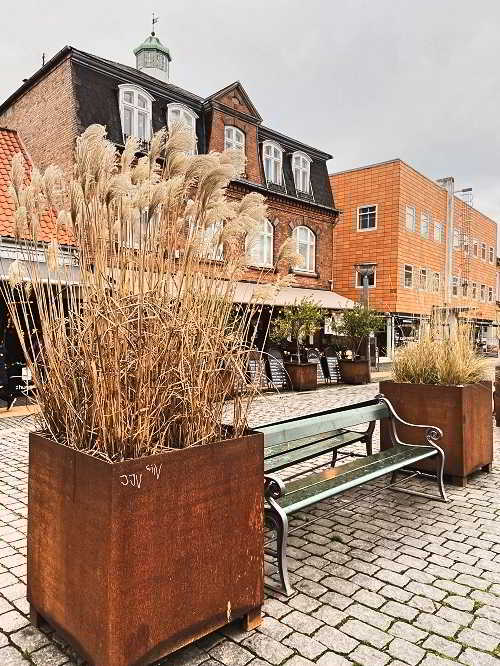
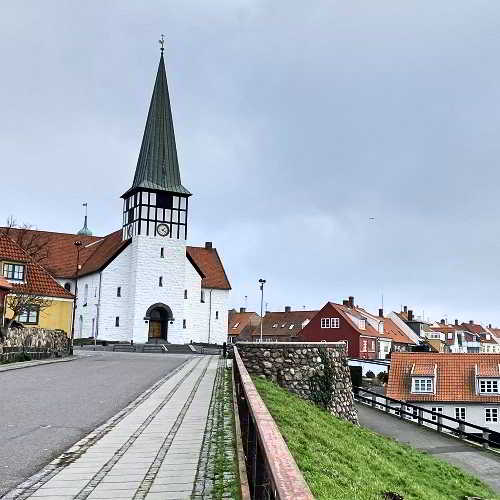
When in the capital, you should definitely stroll through the centre of Rønne—and it’s worth wandering into side streets. Rønne and Nexø are the only Danish towns that suffered during Soviet bombings. Walking among the low buildings, it’s interesting to see which houses were rebuilt after wartime damage. The Christmas atmosphere is also felt most strongly in the capital. A small Christmas market is set up on the main square, surrounded by light decorations. Rønne is also a good place for holiday shopping, and local stores offer not only Bornholm products but also classic Danish brands.
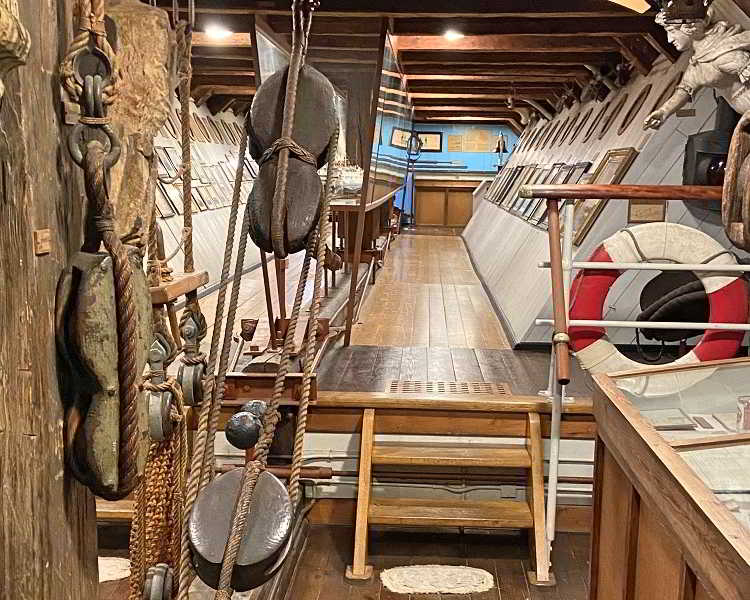
It’s also worth spending time at Bornholm’s main museum. A particularly interesting part of the exhibition concerns the island’s wartime history. Personally, I was also intrigued by a small room dedicated to Polish connections in this part of the Kingdom of Denmark.
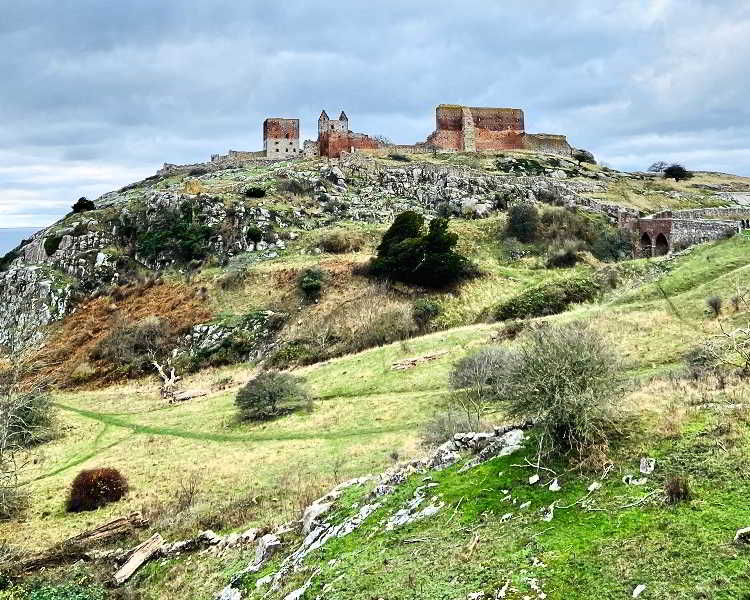
A year-round attraction on Bornholm is the ruins of Hammershus Castle from the mid-13th century. Visiting the stronghold is free, and walking around the walls is much more pleasant in winter, when there are no crowds.
All year round you can also admire interesting rock formations on the island’s northern coast. The Helligdomsklipperne cliffs near Gudhjem are especially worth seeing.
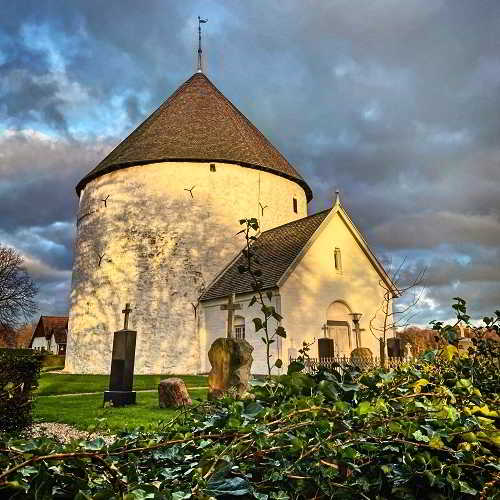
While travelling around the island, in some villages you can come across so-called round churches. Whitewashed buildings with rounded shapes are a typically Bornholm architectural phenomenon and deserve a closer look. Another recurring element is windmills, which fit beautifully into the island’s idyllic landscape.
As an art lover, I also couldn’t miss a visit to the Bornholm Art Museum. The gallery is housed in a modern building near the town of Rø, in the northern part of the island. The most interesting part of the exhibition is works depicting Bornholm—landscapes, people and everyday life.
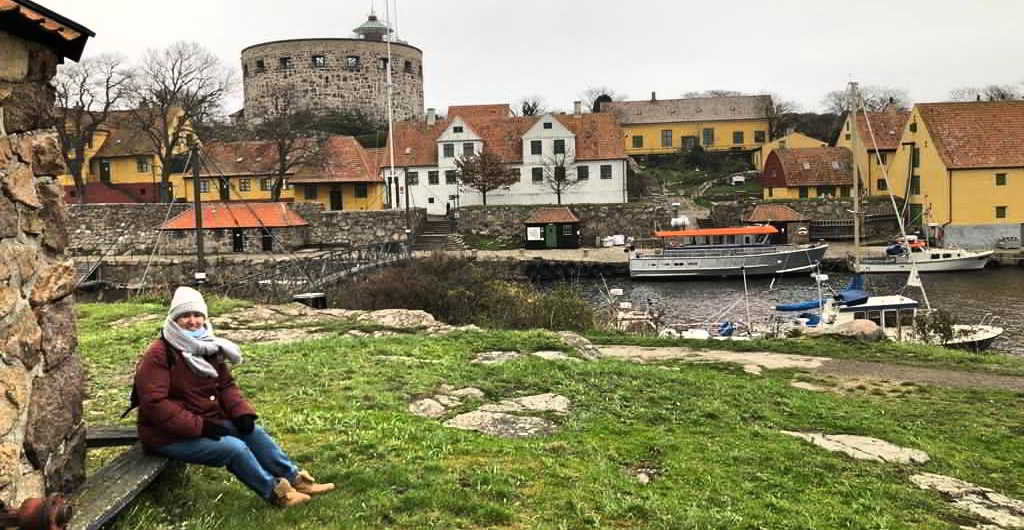
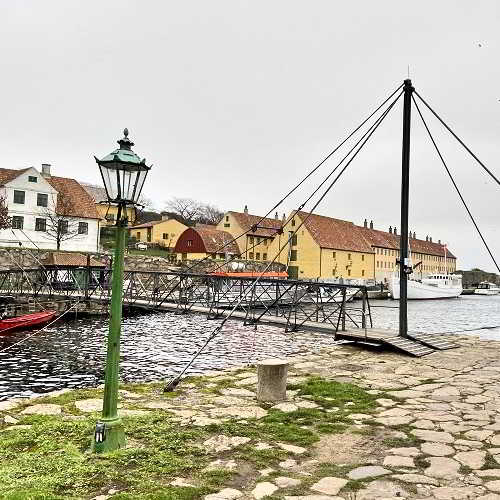
It’s not hard to notice that Bornholm’s nature—pristine Baltic beaches, rocky coastline and the fishing atmosphere of local villages—was the main source of artistic inspiration. It’s also worth visiting the nearby islet of Christiansø, part of the Ertholmene archipelago. The islet boasts a rich history, and its strategic location gave it significant military importance. In summer, Christiansø is crowded with tourists, which is why visiting in winter is a unique and authentic experience. Walking along local paths, you can feel like one of the 84 people who live there. In winter, communication between Bornholm and Christiansø is handled by the mail boat “Peter”, and the one-hour crossing over the rough Baltic Sea is an adventure in itself. When driving around the island, it’s worth being ready for spontaneous stops—especially since road signs often point to active art workshops or ceramic studios, sometimes with small cafés attached.
When visiting Bornholm—especially off-season—it’s worth giving yourself time and permission to travel slowly, soak up the silence and calm, and connect with locals. Bornholm is a fascinating and authentic island where it’s easy to leave your heart—even in winter!
Author: Kinga Eysturland (www.kierunekdania.pl)