mills on bornholm • windmills • watermills • industrial heritage • history • landscape

Mills on Bornholm

Bornholm is often called “the island of mills”. In the past, more than 200 mills operated here (windmills and watermills), and around 20 sites have survived to this day. These are unique technical landmarks that pair perfectly with a road trip or a cycling route.

Since
c. 1500
Types
Post mills • Dutch windmills • Watermills
Today
c. 20 preserved
Best for
cycling • photos • slow sightseeing

The history of mills on Bornholm

The first windmill on Bornholm was built around 1500 near Hammershus Castle. At first, mills were mainly used for grinding grain, but as industry developed in the 17th century, they also began powering equipment in other trades.

Mills were spread across the whole island, but the best-preserved ones today are found in the east, north and south. They’re among the most photogenic “Bornholm” sights—perfect for a short stop on the way.

Why visit the mills?

Because it’s a great mix: history + technology + landscape. Windmills and watermills show how the island worked in earlier centuries—and they make an excellent photo backdrop.
Mills on Bornholm – the main types

On Bornholm you’ll come across three main mill types: post mills, Dutch windmills, and watermills.

Post mills

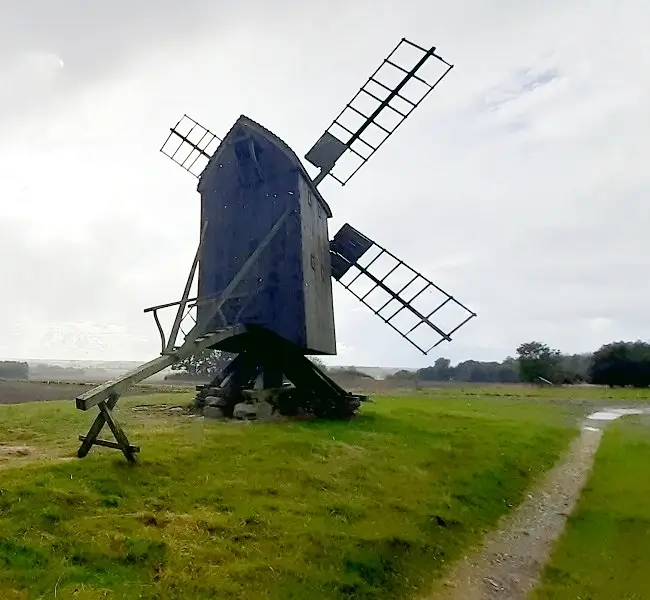
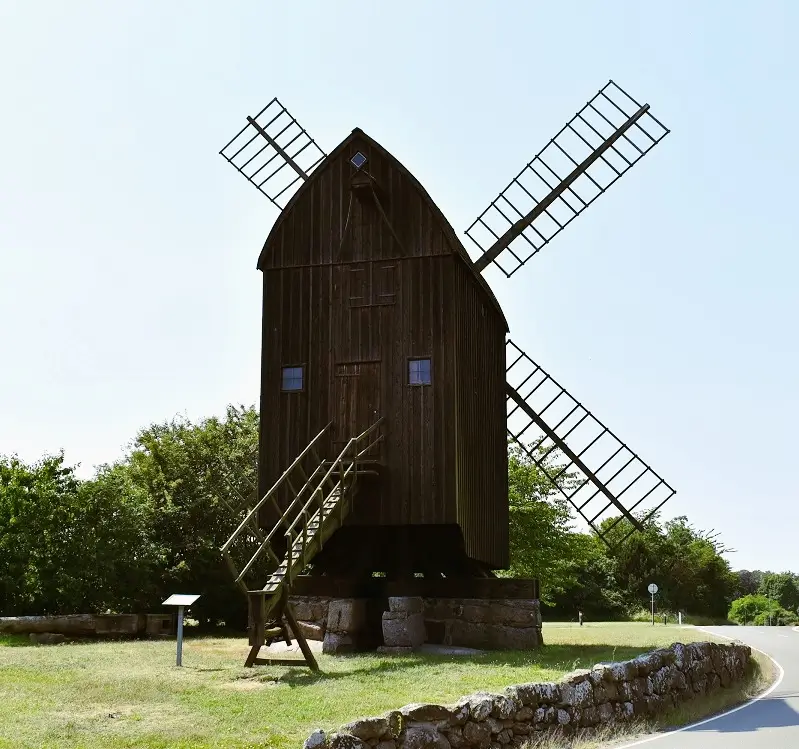
Post mills are the oldest and most “classic” wooden windmills. Their hallmark is a construction based on a massive central post, which meant that the entire mill body could be rotated to face the wind. It’s a simple but brilliant solution that supported local life for centuries. Today, post mills are extremely photogenic: the wooden silhouette, traditional form and often beautiful surroundings make them feel like living history embedded in Bornholm’s landscape.

Dutch windmills

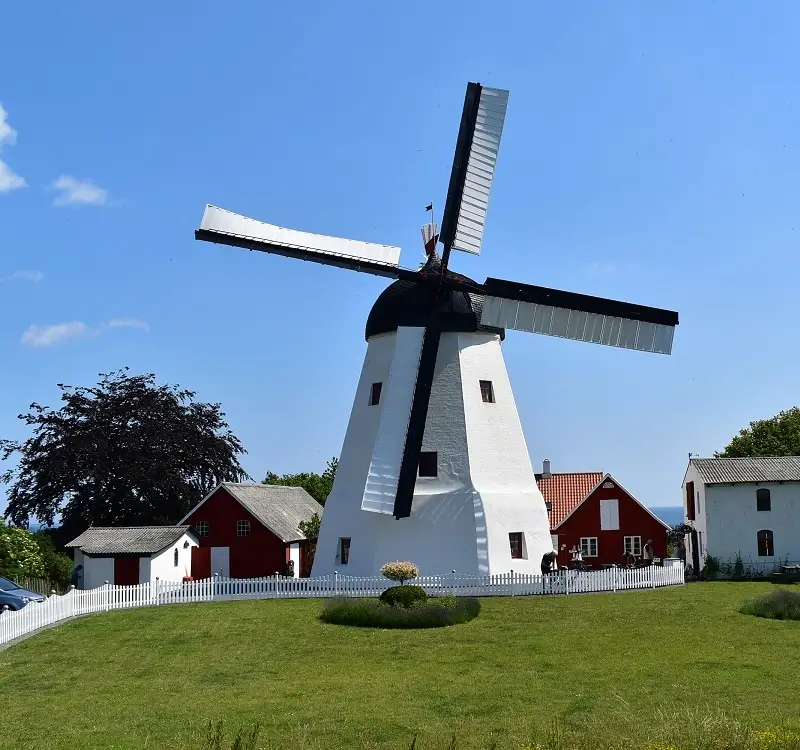
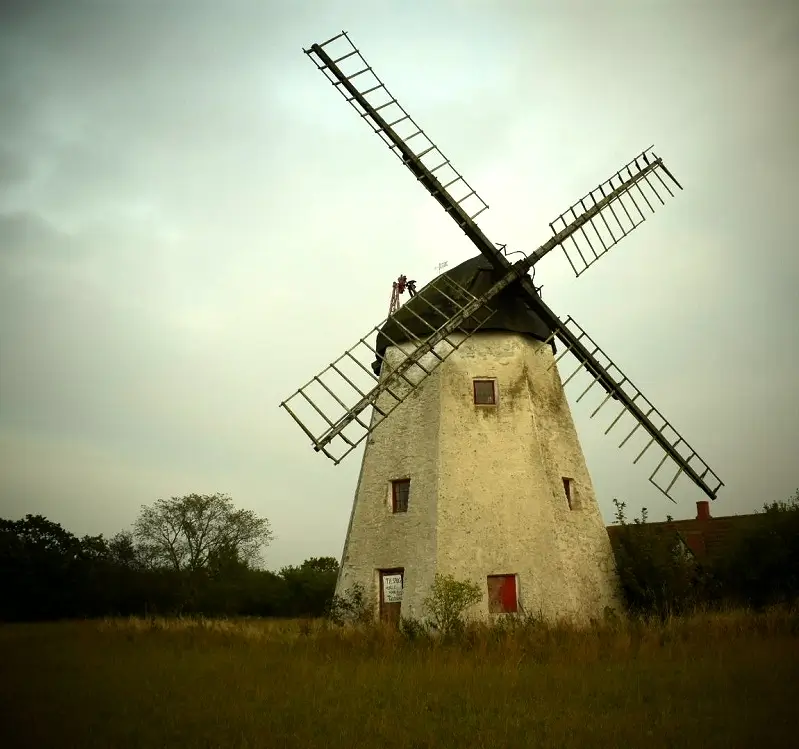
Dutch windmills are a newer, more advanced form of windmill technology. Unlike post mills, the whole building does not rotate—only the top, i.e. the cap with the sails. This allowed for larger, more stable structures with more space inside for mechanisms. On Bornholm you’ll see both well-preserved examples and quieter “view from outside” monuments— each has its own atmosphere.

Watermills

Watermills used the energy of flowing water—usually along streams and small rivers. Instead of wind, a waterwheel drove the milling mechanisms. They’re rarer today, but often set in very scenic spots: valleys, ponds and sluices, surrounded by greenery. A great choice for a calm walk and “quiet” sightseeing away from the busiest hotspots.

Post mills Dutch windmills Watermills

Post mills on Bornholm

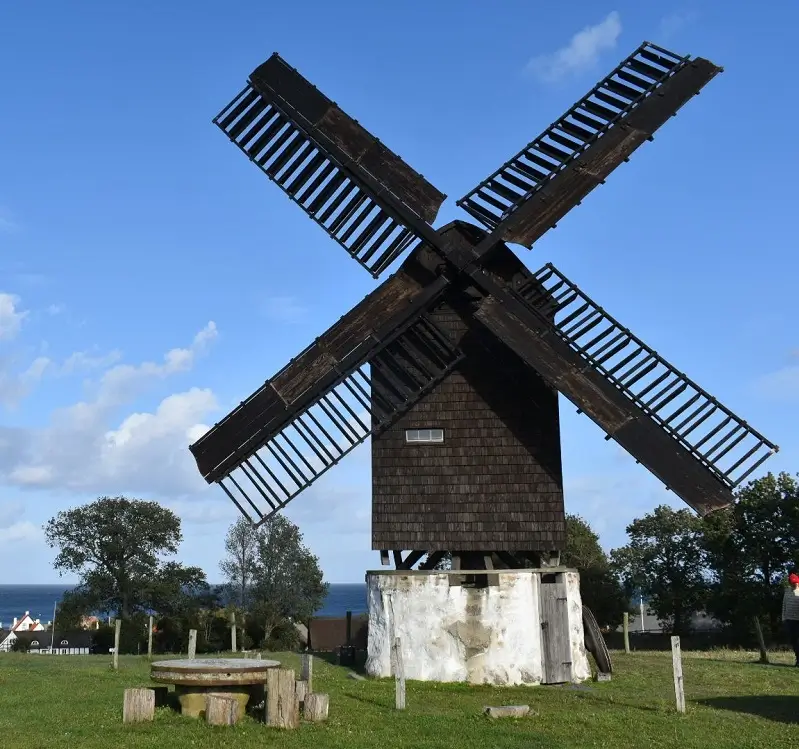
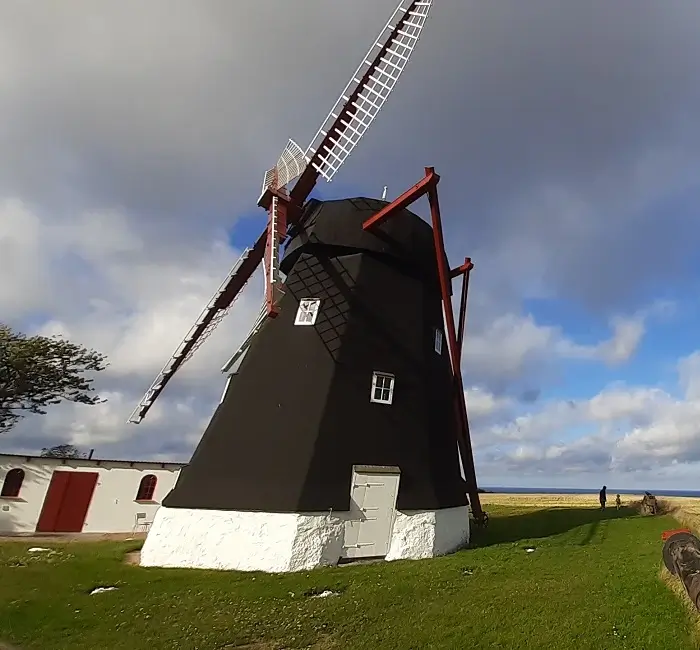
Post mills (among the oldest mill designs in Europe) stand on a massive wooden post, which meant the whole mill body could be turned to face the wind. On Bornholm, three post mills remain: Bechs Mølle (Svaneke), Egeby Mølle (Åker), and Tejn Mølle (Melsted).

These are some of the island’s most atmospheric landmarks—ideal for a short stop, quick history and great photos.

Bornholm – Bechs Mill

Bechs Mølle – the oldest and largest post mill on Bornholm

Bechs Mølle stands on the edge of Svaneke. Built in 1629, it’s the largest of the three preserved post mills on the island and also the largest post mill in Denmark. The mill operated until 1928, and thanks to successive restorations it remains in very good condition.

Bornholm – Egeby Mill

Egeby Mølle – the island’s most distinctive post mill

Egeby Mølle (1787) lies between Bodilsker and Aakirkeby. Its history includes relocation after damage and a major restoration in 1996–1999. Today it’s operational and shows what mill work looked like in earlier times.

Bornholm – Tejn Mill (Melsted)

Tejn Mølle (Melsted Mølle) – a post mill by Melstedgård

Tejn Mølle (also known as Melsted Mølle) stands above the Melstedgaard Agricultural Museum. Originally built around 1800 in Årsballe, it was moved to Melsted in 2006. It’s one of the few mills that is still occasionally used in practice.

Back to top

Dutch windmills on Bornholm – the “modern” 18th century

In the mid-18th century, Bornholm began building Dutch windmills in which only the cap with the sails rotated. This made it possible to create larger structures with more space for machinery. The first such windmill was built in Rønne in 1793.

Today, around 12 Dutch windmills survive on Bornholm—an excellent snapshot of technological progress in milling.

Bornholm – Aarsdale Mill

Aarsdale Mølle – a Dutch windmill that still operates (since 1877)

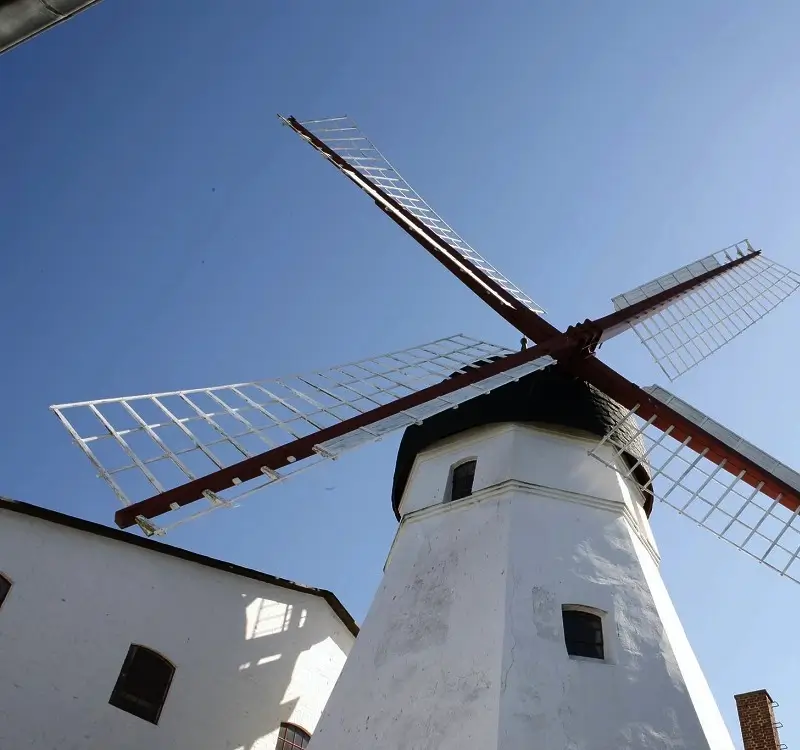
Aarsdale Mølle is a true Bornholm icon. Built in 1877, it’s the only mill in Denmark operating continuously since it was constructed. You can visit the interior, learn about the milling process and buy freshly milled flour on site.

Bornholm – Myreagre Mill

Myreagre Mølle – an octagonal windmill on the Aakirkeby–Nexø route

Myreagre Mølle stands out with its octagonal shape and local sandstone construction. Once an important community landmark, it remains a special stop for architecture lovers and photographers.

Bornholm – Kullmanns Mill (Denmark’s largest Dutch windmill)

Kullmanns Mølle – the largest Dutch windmill in Denmark

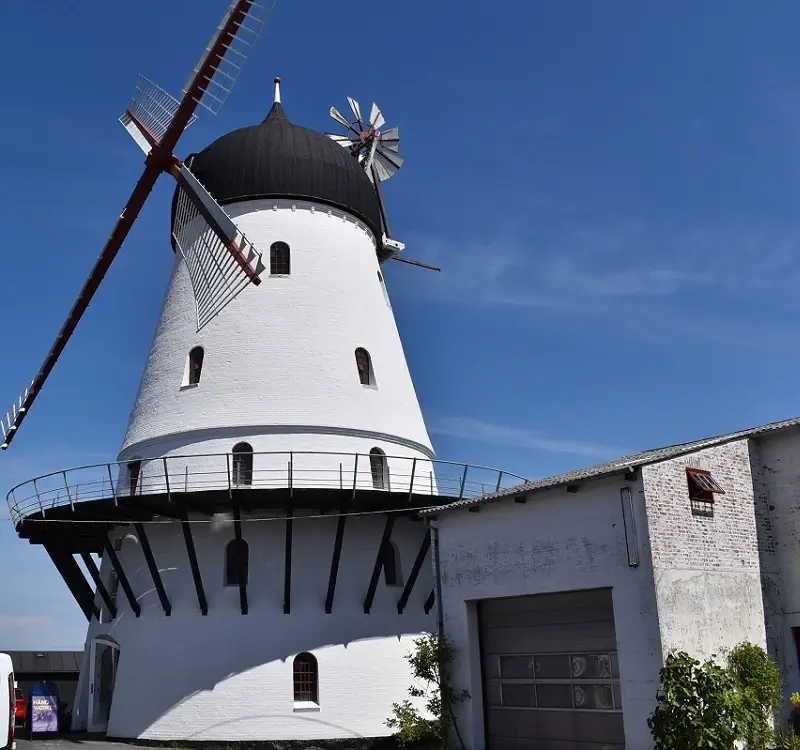
Kullmanns Mølle stands high above Gudhjem. Built in 1893, it has changed functions over the years (including as a workshop and venue), and today it remains one of the town’s most recognisable landmarks.

Bornholm – Kirkemølle (the island’s only stone windmill)

Kirkemølle – Bornholm’s only preserved stone windmill

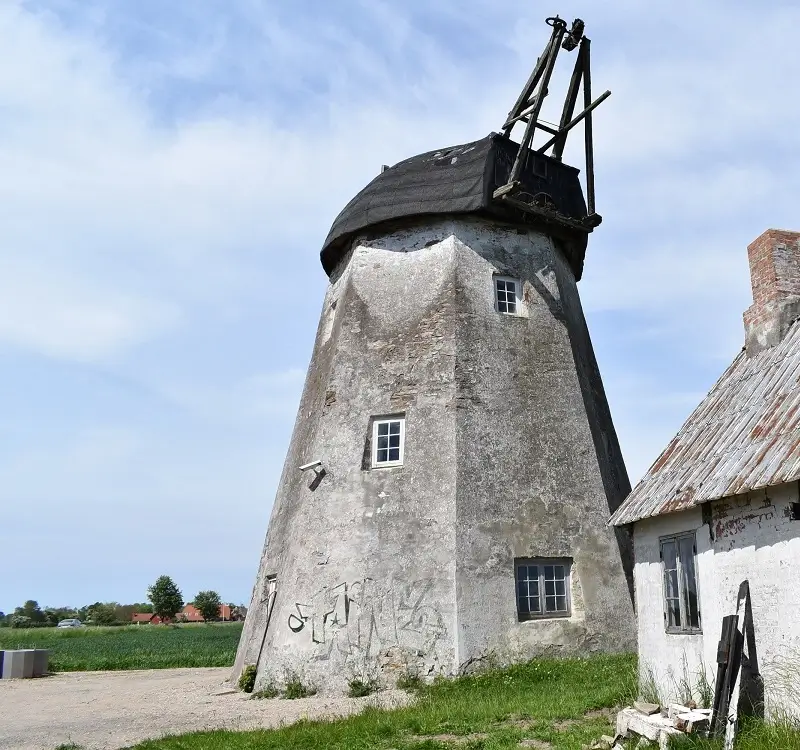
Kirkemølle (1861) is the island’s only surviving stone windmill, built from local sandstone. After years of neglect it was rebuilt (restoration completed in 1982) and is now one of Bornholm’s most interesting technical heritage sites.

Bornholm – Valsemølle windmill south of Aakirkeby

Valsemølle – a historic windmill south of Aakirkeby

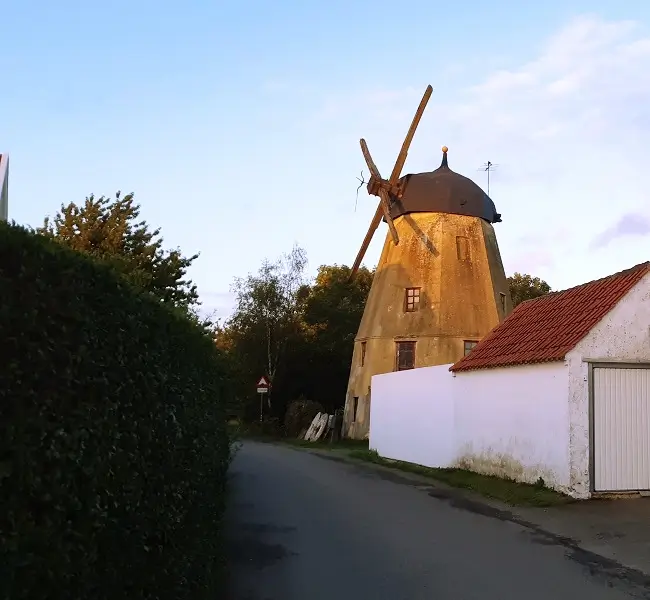
Valsemølle (1867) stands in the courtyard of a modern flour-producing mill. After a fire in 1976, it was restored due to its heritage value—an important piece of Bornholm’s industrial history.

Bornholm – Kuremølle on the Svaneke–Østermarie road

Kuremølle – a windmill on the Svaneke–Østermarie route

Kuremølle (linked to the Sommer family) operated until the early 1950s. After the bakery closed in 1976, a friends’ association led restoration work—helping the site survive in good condition.

Bornholm – Svanemølle, one of the best-preserved mills

Svanemølle – one of Bornholm’s best-preserved windmills

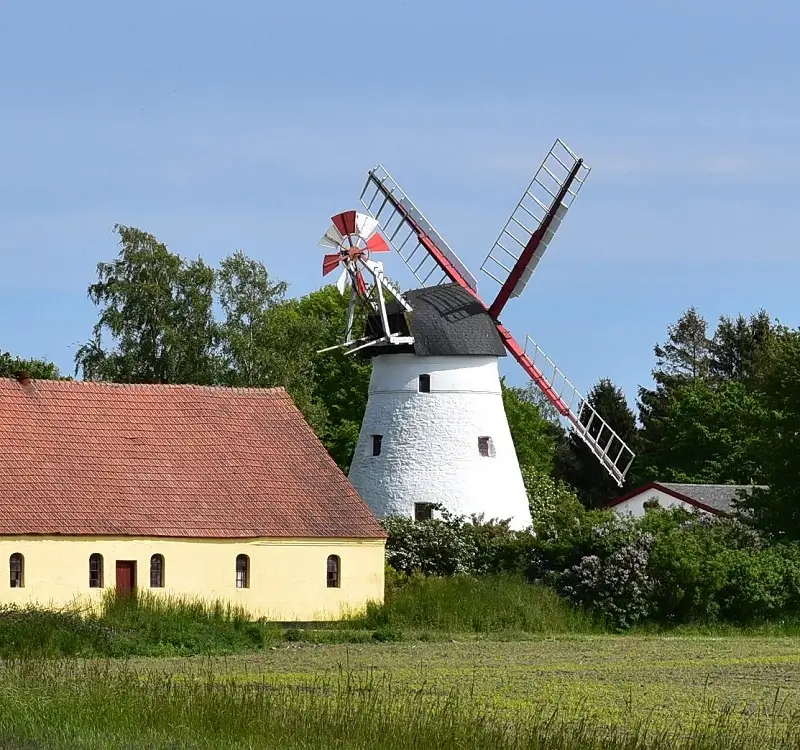
Svanemølle (1856) is a beautifully preserved wooden Dutch windmill above Svaneke. Community stewardship and restorations (including 1960) helped it stand the test of time.

Bornholm – Saxebro Mill near Boderne

Saxebro Mølle – a Dutch windmill on the Rønne–Snogebæk road

Saxebro Mølle (near Boderne) operated until 1958, when a storm damaged its sails. It’s a classic example of a “mill + buildings + former bakery” complex.

Bornholm – Bakkemølle, an octagonal stone mill in Nexø

Bakkemølle (Nexø) – an octagonal stone windmill

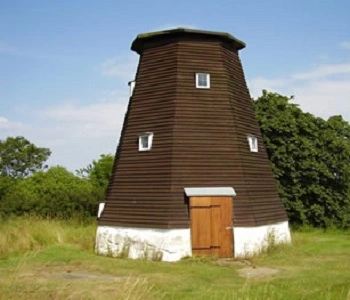
Bakkemølle (1871) was an important part of local milling for almost 100 years. After closing in 1970, the machinery was removed—today it’s mainly the structure and the story of the place.

Bornholm – Stenby Mill, the oldest wooden Dutch windmill on the island

Stenby Mølle – the oldest wooden Dutch windmill on Bornholm

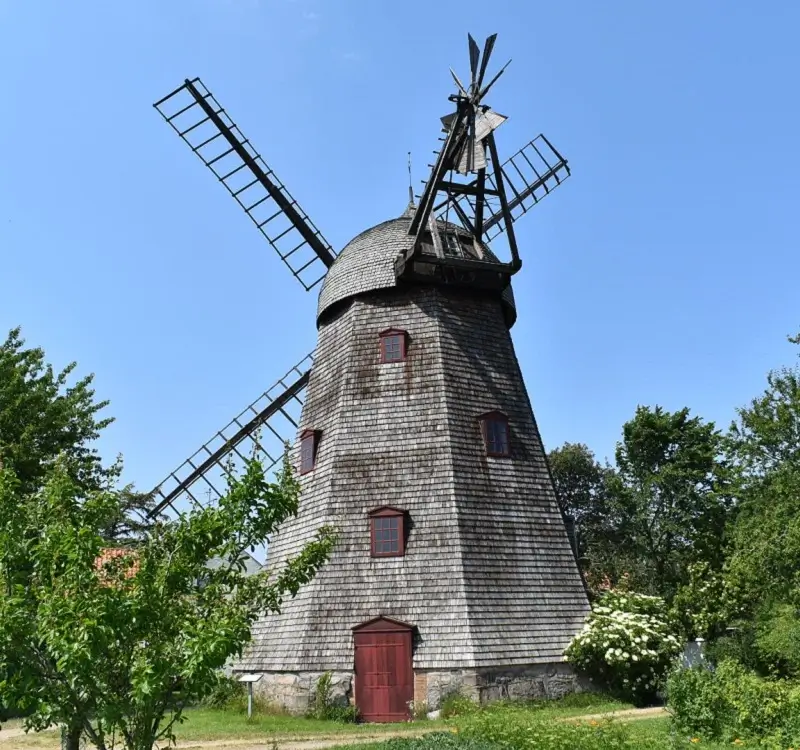
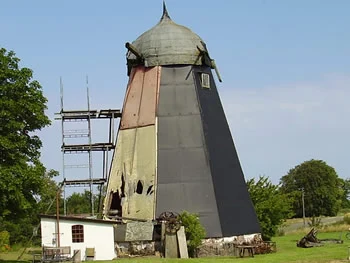
Stenby Mølle (1857, near Rø) is the island’s oldest preserved wooden Dutch windmill. It still needs further restoration—ultimately a new cap and sails to regain its historic look.

Bornholm – Røbro Mill, the youngest wooden windmill

Røbro Mølle – Bornholm’s youngest wooden Dutch windmill

Røbro Mølle (1895) preserves early 20th-century technology, making it a valuable example of milling development. The sails were renewed in 1949 and removed in 1970.

Back to top Go to the watermills

Watermills on Bornholm

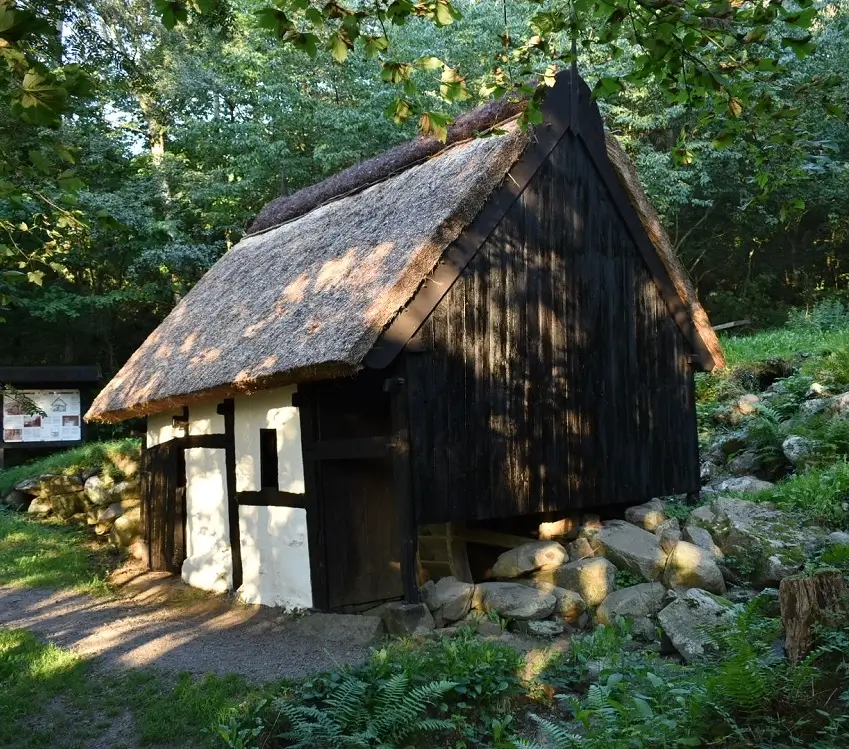
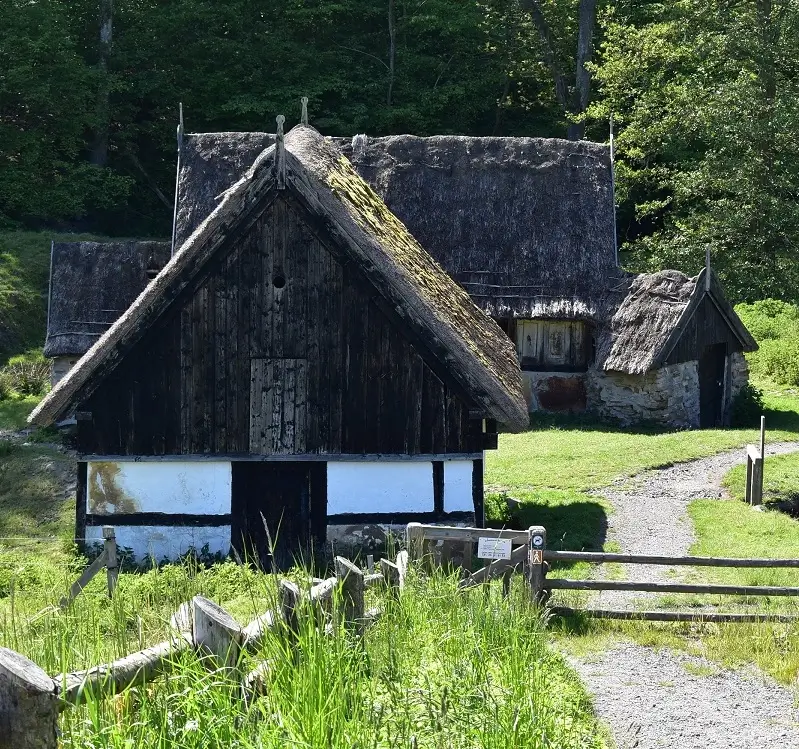
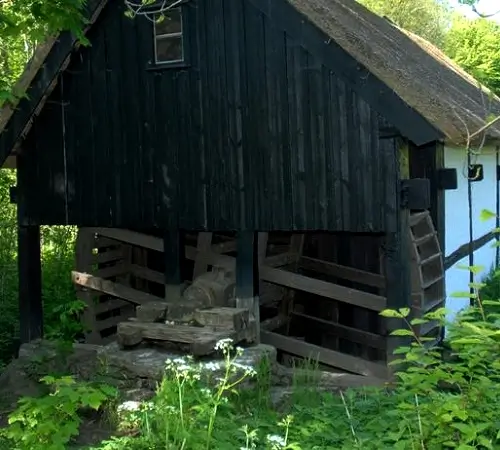
In the past, watermills were a common part of Bornholm’s landscape—especially along waterways. Over time, smaller constructions were replaced by larger mills with vertical drive wheels. Three sites have survived: Vang Vandmølle, Slusegårds Vandmølle and Ågårds Vandmølle.

Vang Watermill – the best-preserved watermill on Bornholm

Vang Watermill – the best-preserved watermill on Bornholm

Vang Vandmølle (1811) is the best-preserved watermill on the island. After it stopped operating in 1905, it was restored and protected as a heritage site. Since 1969 it has been cared for by Bornholm Museum, and renovations (including 2010–2011) have kept it in excellent condition.

Slusegård Watermill – a working heritage site in South Bornholm

Slusegård Watermill – a working heritage site in South Bornholm

Slusegårds Vandmølle lies by Øle Å near Sømarken. It includes a sluice system and trout pond, and the mill itself (early 18th century) is a fine example of traditional Bornholm architecture. After restorations in the 1950s and 1960s, and the installation of a new mill mechanism in 1989, the site remains functional to this day.

Ågård Watermill – a hidden gem near Pedersker

Ågård Watermill – a hidden gem near Pedersker

Ågårds Vandmølle is a small, charming mill by Øle Å. It stopped being used in 1958, but it is regularly maintained. Together with the pond, it forms a calm, scenic corner and shows what smaller watermills on Bornholm looked like.

Back to top All mills

FAQ: mills on Bornholm

Which mills should I see first on Bornholm?

If you want a “top 2” start, choose Kullmanns Mølle in Gudhjem (the largest Dutch windmill in Denmark) and Aarsdale Mølle in Årsdale (the only mill in Denmark operating continuously since 1877). Both are great stops when exploring the east side of the island.

How much time should I plan for a mill route?

For a quick overview of 3–5 mills, plan about 2–4 hours (including driving and photo stops). If you want to see more and add short walks nearby, treat it as half a day.

Can I go inside the mills?

It depends on the site and the season. Some mills are private or only viewable from outside, but you may find open days, events or limited visiting hours. It’s safest to assume you’ll mainly see the mills from the outside, with interior visits as a bonus.

What’s the difference between a post mill and a Dutch windmill?

A post mill is older: the whole mill body rotates to face the wind. A Dutch windmill is newer: only the cap (top) with the sails rotates, which allowed bigger and more efficient structures.

Are mills a good idea in any weather?

Yes—many mills can be seen without long walks, so they work even in wind or light rain. They also pair nicely with coffee stops in the towns and short viewpoints.

Is it better to visit mills by car or by bike?

By car you’ll cover more ground quickly, but cycling gives the best Bornholm vibe and fits perfectly with short stops. For an active day, plan segments of 5–15 km with photo breaks.

Are Bornholm’s mills good for families with kids?

Definitely. Mills are visual and tangible, and kids often enjoy stories about how wind or water powered machines. The best plan: short drive, 10–20 minutes on site, photos—then the next stop.

Back to top Types of mills

Want to see the mills with a guide or plan a bike route?

Choose what fits you best: a guided tour (context + ready-made plan) or cycling (Bornholm’s best vibe and full freedom).

Guided tours Bike rental
Advertising bornholmsmuseum
This site uses cookies to make it work better.
Facebook
Instagram