bornholm • top attractions • Hammershus • Christiansø (Ertholmene) • Dueodde Beach • round churches • Almindingen • Helligdomsklipperne • smokehouses
Top places to visit on Bornholm
Looking for the most popular attractions on Bornholm? The island is packed with unforgettable places—from the Hammershus castle ruins and the wild granite coast to sandy beaches, iconic round churches, museums, and local food traditions. Many of these spots are worth visiting all year round.
Best for
first-time visitors
Style
road trip • short walks
Season
many spots year-round
Tip
choose 2–4 places per day
Find your favourite place on Bornholm
Bornholm offers far too many unique experiences to list them all in one go—so start here for inspiration. On the way, you’ll discover the island’s landscapes, food culture, and the warm, welcoming vibe of small towns. Below you’ll find a curated selection of the most popular places to visit.
Bornholm highlights at a glance
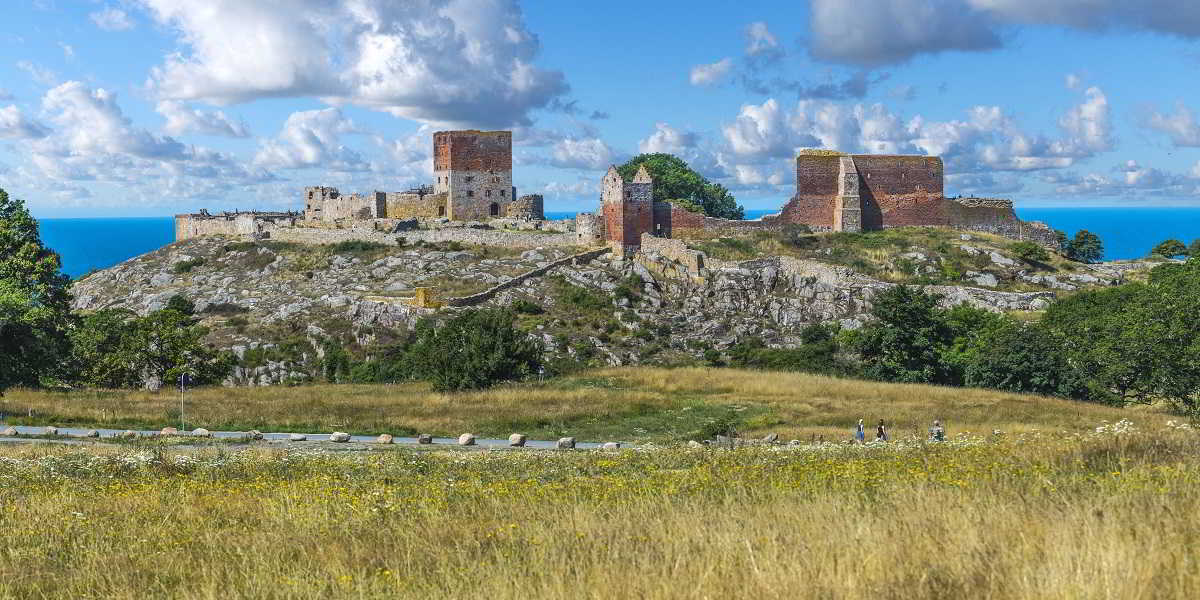
Hammershus Castle Ruins
The dramatic medieval Hammershus ruins are Bornholm’s most famous attraction. The fortress was built around 1250 on the steep granite slopes of Hammeren. From here you’ll get big views of cliffs, the Hammershus Visitor Centre, and the rocky formations below (often nicknamed the camel’s head and the lion). In clear weather you may even spot the Swedish coast roughly 40 km away.
Hammershus can be visited free of charge all year round. Note: the Visitor Centre has introduced paid parking.
Opalsø & Hammersø lakes
Opalsø is a former granite quarry lake from the late 19th/early 20th century—once part of Bornholm’s major granite export industry from Hammerhavn. Today it’s a peaceful spot with emerald water, cliff viewpoints, and a great perspective towards Hammershus and nearby Sandvig. The steep quarry walls are also a well-known climbing area.
Hammersø, right next to Opalsø, is Bornholm’s largest lake (about 10 hectares; max depth ~13 m), sitting between the rocky Hammeren headland and the rest of the island.
Want more nature ideas? See: Lakes and peat bogs on Bornholm.


Christiansø – the Ertholmene archipelago
Christiansø is a tiny Danish island in the Baltic Sea, around 20 km from Bornholm. With only about 22 hectares, it’s the largest island in the Ertholmene archipelago—a cluster of small islets and rocks with a strong fortress history.
All buildings are protected, and new construction is prohibited. Look out for fortifications and landmarks such as Bastion Rantzau, Store Tårn (the Great Tower), Lille Tårn (the Small Tower), the royal garden, the church and defensive walls. You can reach the island by ferry from Gudhjem.
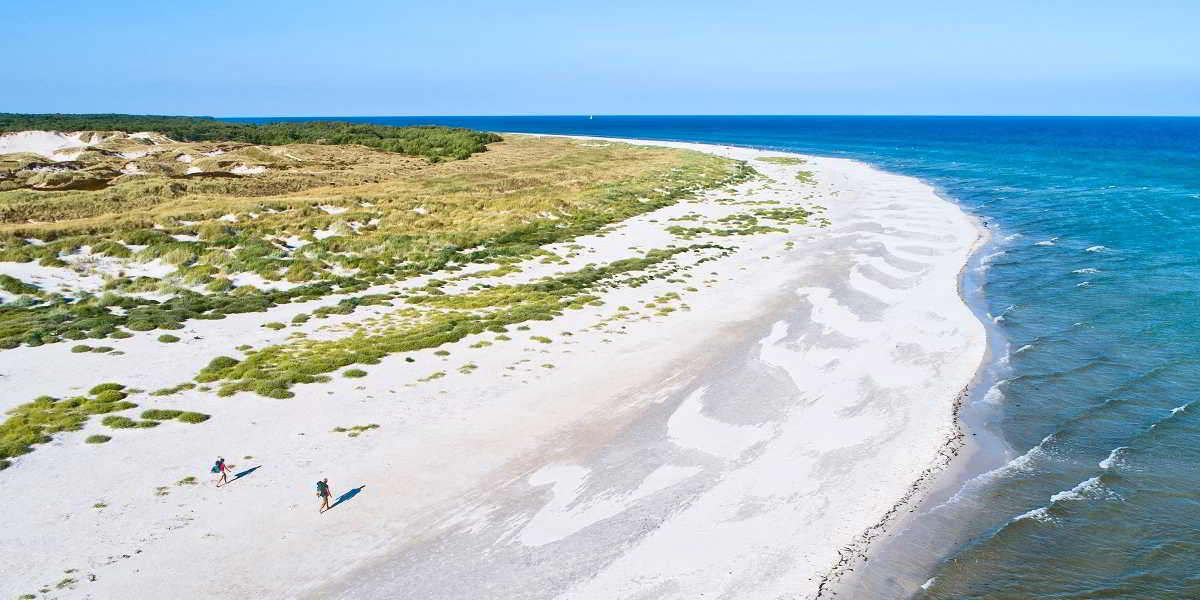
Dueodde Beach
Dueodde on the southern tip of Bornholm is often considered one of the most beautiful beaches in Europe. The wide, sandy shoreline is backed by impressive dunes that continue inland. Part of the dune landscape was planted with pines and grasses in the 19th century.
For panoramic views, climb the Dueodde lighthouse (47 m). Hidden in the pine forest behind the dunes you can also find two unfinished WWII-era gun batteries built by the German forces.
More beach inspiration: Beaches on Bornholm.
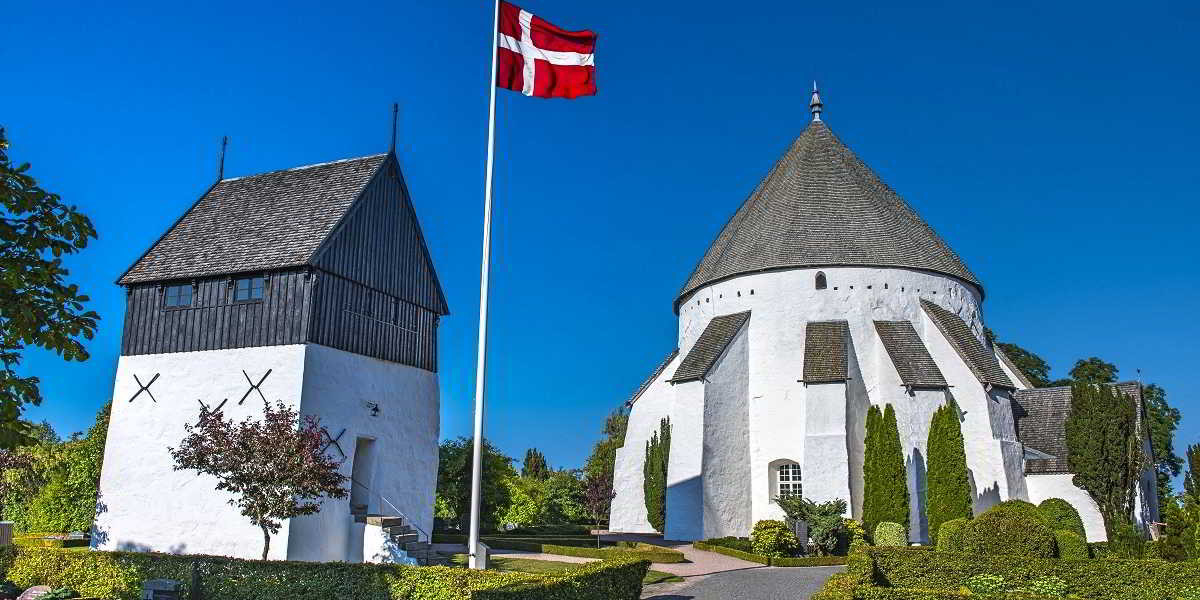
Bornholm’s round churches
Bornholm’s iconic round churches are among the island’s most fascinating sights. They were not only places of worship but also served defensive purposes—reflected in their multi-level structure (most have three floors; Ny Kirke has two) and narrow stairways.
The lowest level functioned as a chapel, the middle level stored supplies, and the top level worked as an observation and defence platform. The four classic round churches date back to the 12th century.
Plan your route here: Churches on Bornholm.
Jons Kapel
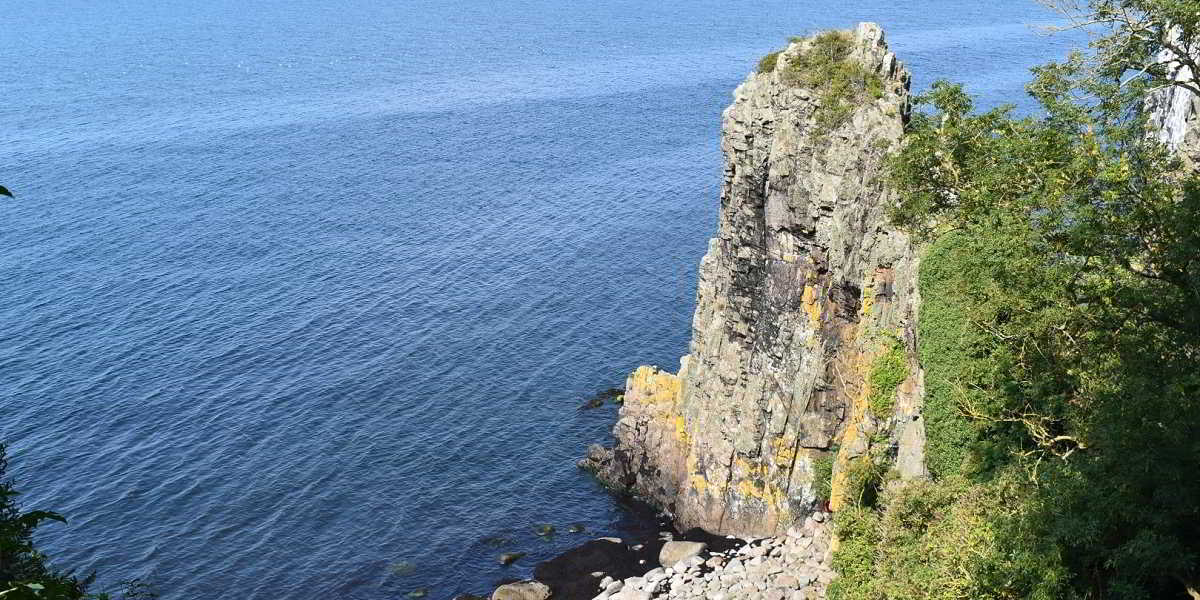
Jons Kapel (“Jon’s Chapel”) is a striking rock formation on Bornholm’s west coast. Local legends say that around 1,000 years ago a monk named Jon preached Christianity here from the top of a rock known as the “pulpit”, over 20 metres high.
Today you can reach it via 108 scenic stone steps carved into the cliff edge. Nearby are three small caves said to have served as the monk’s bedroom, dining room and cellar.

Museums on Bornholm
Bornholm’s museums are a great way to understand the island—its geology, natural history, culture, everyday life, and art. Many exhibitions are beautifully designed and work well for both adults and children.
Explore options: Museums on Bornholm.
Helligdomsklipperne (Sanctuary Cliffs)
Helligdomsklipperne is a series of cliffs in the Helligdommen area between Tejn and Gudhjem on Bornholm’s east coast. During the Ice Age, much of the coastline lay below sea level—after the ice melted, the island rose, and this section of coast now sits roughly 20 metres above the sea.


Smokehouses on Bornholm
Bornholm’s smokehouses are part of the island’s identity—those tall chimneys are visible all over the coast. Smoked herring with its golden colour is a local signature, and the tradition of smoking fish here goes back a long time. The craft is often linked to Scottish fishermen who once stopped by Christiansø, then the tradition spread via Gudhjem and onwards across Bornholm.
Plan a tasty stop: Smokehouses on Bornholm.
Almindingen Forest
Almindingen is Bornholm’s largest forest and Denmark’s third largest. It covers about 2,400 hectares and is largely man-made. The forest contains the biggest concentration of lakes on the island (including Batemose).
Rytterknægten is the island’s highest point (162 m) and sits near an MTB trail. Ekkodalen (Echo Valley) is a dramatic landscape known for its acoustics. With hiking and cycling routes, Almindingen is perfect for a full outdoor day.

FAQ: top places to visit on Bornholm
What should I prioritise if I only have one day?
Start with Hammershus and the Hammeren area. If you want a beach stop, add Dueodde (or another south-coast beach).
Is Christiansø a full-day trip?
Usually yes. A visit to Christiansø (Ertholmene) is best planned as a separate day, including the ferry ride and time to walk around the fortress island.
Which places work well outside summer?
Great year-round options include Hammershus, Helligdomsklipperne, the round churches, and walks in Almindingen.
How many attractions should I plan per day?
For a relaxed pace, aim for 2–4 stops per day and leave room for viewpoints, cafés and spontaneous detours.
Plan your Bornholm trip the easy way
Choose what fits your style: guided tours, bike rental, or quick planning on the map.